


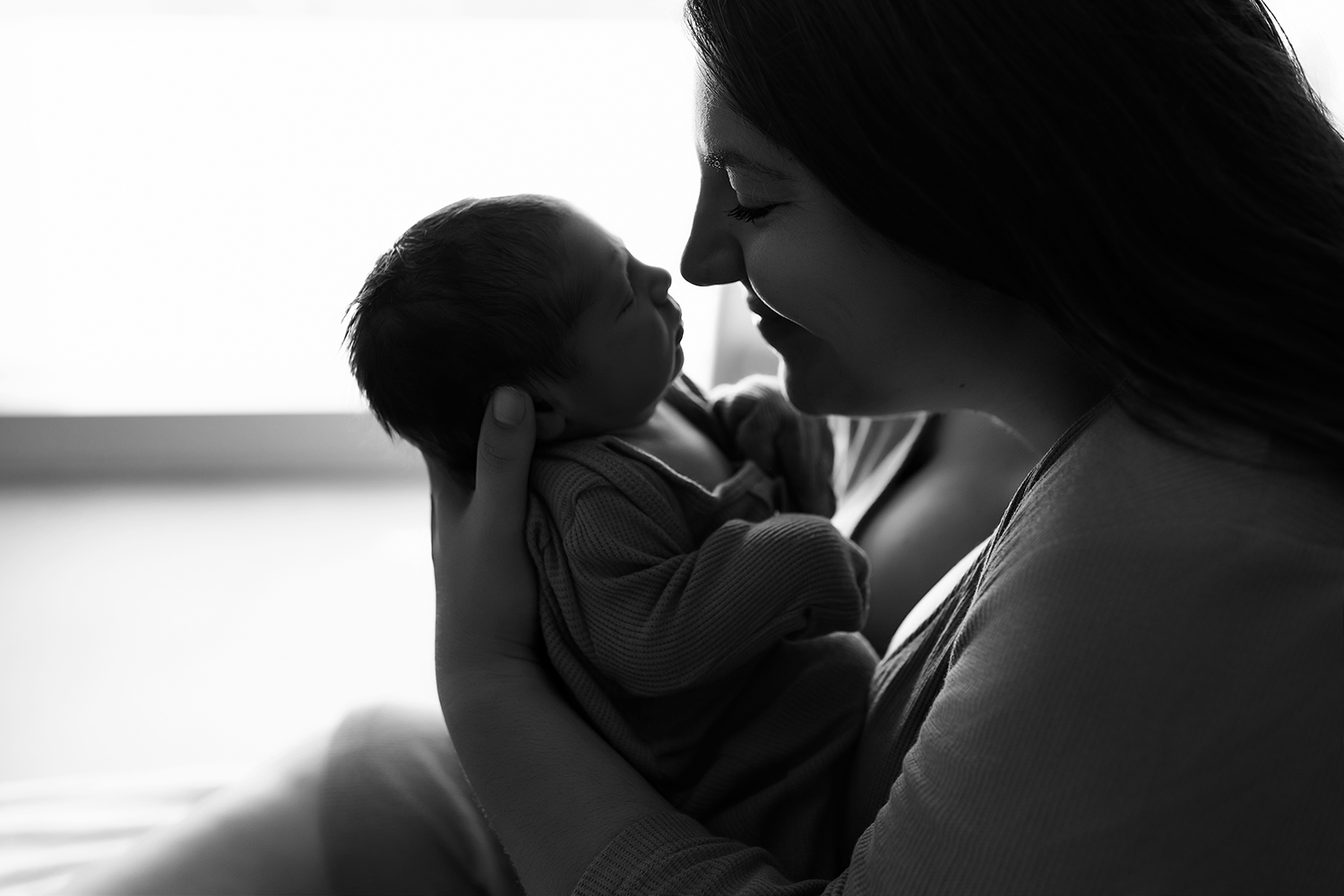
Postpartum mental health is not talked about enough, especially when it doesn’t look the way people expect it to. As a Cleveland and Medina newborn photographer and a mother myself, I’ve seen how common postpartum anxiety and emotional overwhelm are, yet how rarely women feel safe admitting they’re struggling.
I want to share my story not as a medical professional, but as a mother and as someone who works closely with new moms throughout Northeast Ohio, including Cleveland, Medina, and surrounding communities.
If you’re a new mom in the Cleveland or Medina area feeling overwhelmed, anxious, or unlike yourself after birth, I hope this reminds you that you are not alone and that asking for help can make you a stronger, healthier mother.
When Birth Trauma Changes the Postpartum Experience
My first birth was traumatic.
I labored for 34 hours with a failed induction. Eventually, I was put to sleep, and when I woke up, my husband was bottle-feeding our daughter. The moment I had imagined for months was gone, replaced with confusion and emotional whiplash as I tried to understand what had happened while becoming a mother all at once.
Birth trauma doesn’t always look dramatic from the outside. Sometimes it’s quiet. Sometimes it’s processed later. But it can deeply affect the postpartum period, even when everything appears “fine.”
In the weeks after birth, my mind felt like it was constantly racing. My thoughts were fast, nonstop, and overwhelming. I was alert, hyper-aware, and always thinking ahead. But there was one thing that kept me from recognizing a problem:
I didn’t feel sad.
I loved my baby. I bonded with her. I functioned. And because I wasn’t crying all the time or feeling depressed, I assumed this was just part of new motherhood.
Postpartum Anxiety Doesn’t Always Look Like Depression
When my husband returned to work, everything shifted.
Being home alone with a newborn intensified the racing thoughts, and I began experiencing panic attacks. My heart would race. I felt constantly on edge. Worry filled my days, even when nothing was technically wrong.
That’s when I finally went to the doctor — and for the first time, someone gave a name to what I was experiencing:
Postpartum anxiety.
Postpartum anxiety is often overshadowed by postpartum depression, but it is incredibly common among new mothers. Many women in Cleveland, Medina, and beyond experience anxiety after childbirth without realizing it because it doesn’t always include sadness.
Common signs of postpartum anxiety include:
-
Racing or intrusive thoughts
-
Constant worry about your baby’s safety
-
Feeling overstimulated or on edge
-
Difficulty resting, even when the baby sleeps
-
Panic attacks or physical anxiety symptoms
Postpartum anxiety affects loving, attentive, capable mothers every day.
When Anxiety Is Part of Who You Are
I’ve always been a naturally anxious, detail-oriented person. In many ways, this is something I use to my benefit — especially in my work as a newborn photographer. Newborn safety is incredibly important to me, and being alert, prepared, and cautious is a strength in my profession.
But anxiety inside your own home, without rest or relief, is different.
When your nervous system never shuts off, it becomes exhausting. And without understanding what’s happening, it can feel isolating, even when you’re surrounded by people.
Loving Your Baby Does Not Protect You From Postpartum Anxiety
One of the biggest misconceptions about postpartum mental health is that loving your baby should protect you from struggling.
That simply isn’t true.
You can love your baby deeply and still experience postpartum anxiety.
You can feel grateful and still feel overwhelmed.
You can be strong and still need help.
I didn’t realize that because I wasn’t sad, I was still allowed to say, “I’m not okay.”
Seeking Help Makes You a Better Mother
This is the most important thing I want every mother to hear — whether you’re in Cleveland, Medina, or anywhere else:
Seeking help does not make you weak.
It makes you a better mother.
Getting support gave me tools, understanding, and space to breathe again. It allowed me to show up more present and grounded — not because I tried harder, but because I stopped trying to carry everything alone.
Motherhood is not meant to be endured in silence.
We Were Never Meant to Do Motherhood Alone
As a person of faith, I believe deeply that God uses us to build one another up. We are not meant to walk through postpartum struggles in isolation or shame. We are one body, meant to support, encourage, and care for one another.
When one mother says, “I’m struggling,” that is courage.
When another mother listens with compassion, that is community.
That is the body of Christ in action.
Postpartum anxiety is not a failure of faith. It is a human response to an intense physical and emotional transition.
What I See Now as a Cleveland & Medina Newborn Photographer
Today, I meet families across Cleveland, Medina, and Northeast Ohio during the earliest days of parenthood. I see mothers who are exhausted, overwhelmed, and unsure of themselves — even while doing an incredible job.
I see mothers apologize for their homes, their appearance, or their emotions. I see mothers who feel pressure to be joyful when they’re just trying to survive the day.
I want you to know this:
You do not need to be perfect to be worthy of being documented.
You don’t need to “have it all together.”
You don’t need to wait until this season feels easier.
You don’t need to hide how hard postpartum life can be.
If You Are Struggling After Birth in Cleveland or Medina
If your mind feels loud.
If anxiety feels constant.
If you love your baby but feel overwhelmed.
If you don’t recognize yourself right now.
Please hear this: you are not broken, and you are not alone.
Talk to your doctor.
Reach out to someone you trust.
Accept help when it’s offered.
There is no award for doing motherhood the hardest way possible.
A Gentle Disclaimer and Support Resources
I am not a medical professional. This post is shared from personal experience and from years of working with new mothers in the Cleveland and Medina area. If you are struggling with postpartum anxiety or postpartum depression, professional support can make a meaningful difference.
If you need immediate support, Postpartum Support International and 988 are confidential, available, and life-saving resources.
Supporting Mothers Through the Postpartum Season in Northeast Ohio
Motherhood is sacred — but it is also heavy.
Let’s be women who speak honestly.
Let’s be women who remove shame.
Let’s be women who support one another.
Because seeking help doesn’t make you less of a mother.
It makes you a healthier one — and that matters.


